Executive Summary
Licensing software does not fail on features. It fails the day a brand’s real approval process meets the tool’s imaginary one.
Every licensing program believes its approval chain is standard, and every one is wrong: approval hierarchies encode brand strategy, so they differ by design. This article explains why that variance breaks packaged tools, what a rules-driven workflow engine actually does, and why the problem is hardest for the agencies sitting between many licensors and many licensees.
- Approval workflows are the product, not a feature. Routing, reviewers, stages, and rules define a licensing program’s identity.
- Variance is by design, so one-size tools fail by design. A brand’s approval hierarchy encodes its brand strategy, and no two match cleanly enough for one fixed workflow.
- Agencies feel it worst. Many licensors times many licensees means no packaged workflow can fit, even in principle.
- The test to run this week: pick one artwork submission and count the humans who touched it before a decision. If the answer surprises you, your workflow lives in inboxes.
Licensing runs on approvals. Every piece of artwork, every product, every territory passes through someone’s review before it reaches the market, and the chain of who signs off, in what order, is where a program’s brand protection actually lives. Yet most teams treat that chain as plumbing and buy software to match. Then the tool meets the exceptions their process is built from, and the work quietly leaks back into inboxes and spreadsheets. Understanding why starts with a process most teams assume is ordinary.
Every Brand Thinks Its Approval Process Is Normal. It Isn’t.
Ask a licensing team to describe their approval process, and you will hear something reasonable. Artwork comes in, the right people review it, decisions go back out. Simple.
Then watch it run. Apparel submissions go to one reviewer, unless they involve a particular trademark, in which case legal wants a look first. European territories need a compliance step the domestic ones skip. One licensee has earned fast-track status; another’s history warrants full review every time. A collegiate program wants the institution’s brand steward in the loop. An entertainment property wants talent approval on anything carrying a likeness.
The details differ by program. The pattern does not.
Which Parts Of Your Process Are Strategy, And Which Are Just Old Habits
Some variations encode genuine brand, territory, contractual, or risk decisions. Others are workarounds inherited from email, old org charts, and duplicate reviews no one has questioned in years.
A good implementation removes the second kind before it encodes the first. What survives that filter is the brand’s strategy, expressed as a review chain. The hierarchy of who approves what, in what order, and under what conditions is how a licensing program protects the thing it exists to protect. That is why every program’s process is different, and why each one is convinced it is normal.
Why Packaged Tools Demo Well And Then Break In Real Use
Most packaged licensing tools do offer configuration: forms, rules, some routing. But the configuration lives inside one underlying workflow and data model, and that model handles the common path well. The demo goes well for the same reason. Demos run on the common path.
Production runs on the exceptions.
The first brand whose routing does not fit the model gets a workaround: a shared inbox for the cases the tool cannot route, a spreadsheet tracking the approvals that happen outside it, a standing meeting to reconcile the two. Over time, the tool holds the records and email holds the process. The team is paying for software while running the workflow by hand. The failure is quiet, which is why it persists.
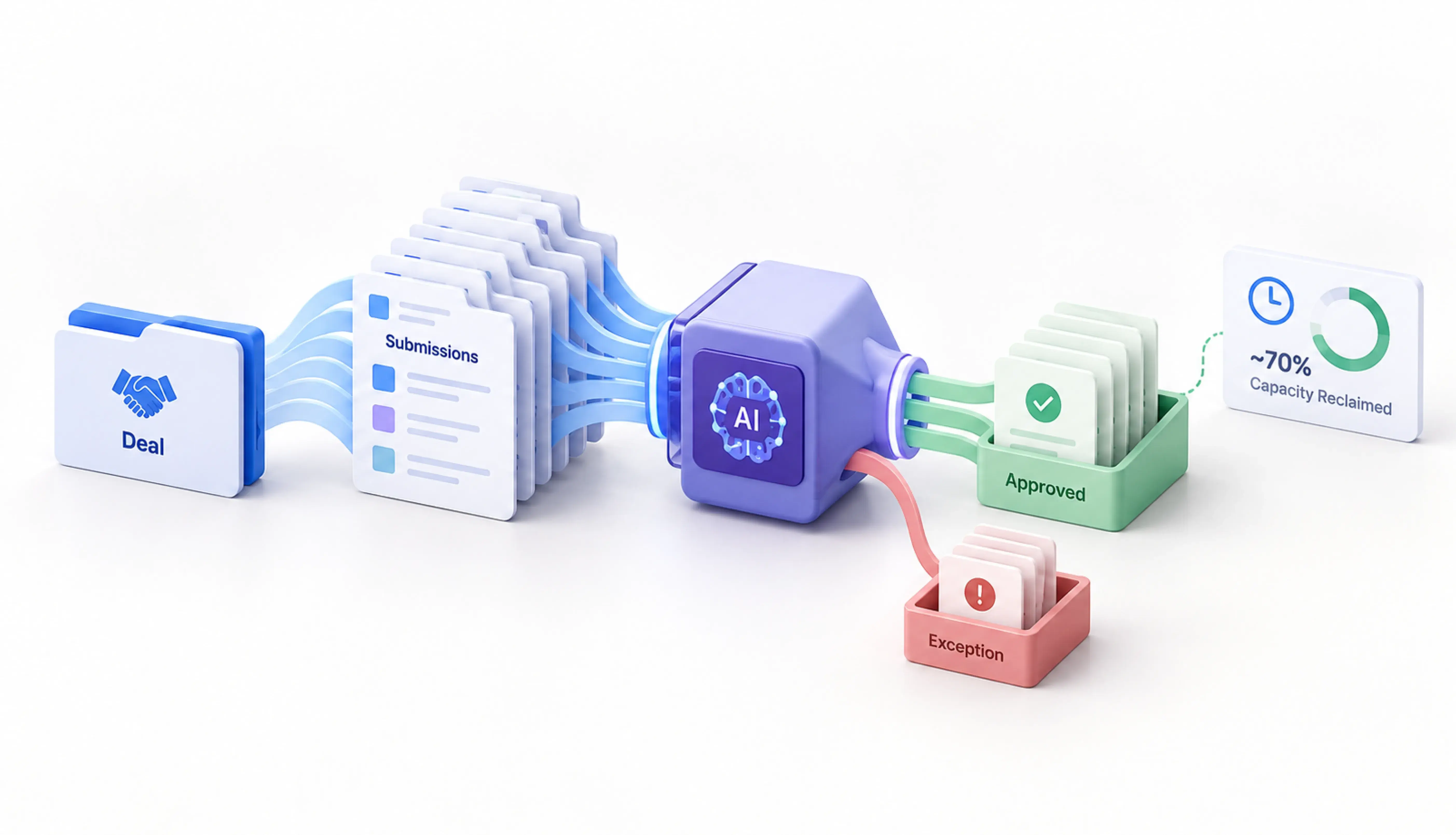
A workflow engine isn’t a feature of licensing software. For any program with more than one brand or process, it is the software.
What “Configurable” Should Actually Mean (And Usually Doesn’t)
Configurable is the most abused word in enterprise software, so it is worth being concrete. In the licensing platforms we engineer, it means the program’s own people, not our engineers, define the following:
- Forms. Submission forms built per brand with a drag-and-drop builder, including stage-specific forms, in multiple languages where the licensee base needs them.
- Stages. Named review stages, each with its own approvers, sequencing, statuses shown to the licensee, and rules for when a stage can be skipped.
- Routing rules. Conditions on trademark, product category and subcategory, territory, distribution channel, and licensee that automatically route each submission to the right workflow and reviewers.
- People outside the org chart. Ad hoc reviewers invited into a single stage of a single submission, with an informational or a mandatory decision, without becoming platform users in any broader sense.
- Automation at the edges. Auto-advance where a stage’s conditions are met, rule-based decisions where review adds nothing, and hard gates where the business demands them, such as pausing new artwork submissions while minimum-guarantee payments are overdue.
To be fair about the boundary: a packaged product may be enough for one brand, a small reviewer group, and a limited set of conditional routes. The case for a configurable platform begins when rules vary materially by brand, territory, category, licensee, channel, or external reviewer, and those variations have to stay auditable in one system.
How One Submission Finds Its Own Reviewers, With No One Sorting It By Hand
Here is the kind of decision these rules make daily. A licensee submitting embroidered apparel for the EU market routes to a different workflow and different reviewers than one submitting digital packaging for a domestic retailer. Nobody sorts it by hand. The submission’s own attributes carry it to the right people.
A worked trace of one submission, ART-20391, with program-configured rules:
Routing trace · submission ART-20391rules: program-configured
For your business, this is the difference between approval cycle time being a property of the system and being a property of whoever is least behind on email this week.
Why This Is Hardest If You’re An Agency, Not A Brand Owner
A brand owner has one process to encode, however baroque. A licensing agency sits between many licensors and many licensees, and each licensor brings its own forms, hierarchies, systems, and working practices. The agency cannot standardize its clients into one workflow. The clients are the workflow.
That is why the honest answer for an agency is a platform built around its integrations and operating model, not the other way around. When an agency operator switches into a licensor’s context, the forms, stages, rules, and branding of that licensor should be what they see, inside one system, not across seven browser tabs.
Proof: How This Runs Across 60+ Licensor Programs
We have built this in two large licensing environments.
For WME Group’s brand licensing business, we re-engineered the licensing product management platform around per-program approval workflows, dynamic category-specific forms in place of one-size templates, and mobile review to cut delays across time zones.
For one of North America’s largest sports licensing organizations, we engineered and now operate a platform where a rules engine routes artwork across a program of this shape:
The point is not scale for its own sake. Per-brand configuration and platform-level consistency stop being in tension once the workflow engine is the foundation, not a bolt-on. Sixty-plus licensor programs, none forced into another’s process, with one system of record underneath them all.
A 10-Minute Test You Can Run On Your Own Process This Week
Pick one artwork submission from last month. Count the humans who touched it before a decision, the systems it passed through, and how long it sat waiting between them. Then ask whether anyone could reconstruct that journey today without opening an inbox.
If the answers make you wince, the problem is not your team’s diligence. Your approval process lives somewhere it shouldn’t.
Frequently Asked Questions
Because approval processes differ by design, not by accident. A brand’s approval hierarchy encodes its brand strategy: who reviews what, in what order, under what rules. Packaged tools ship one workflow model and ask every program to fit it, which works until the first brand whose process does not.
The attributes of the submission itself: trademark, product category and subcategory, territory, distribution channel, licensee tier, and the answers given on the submission form. Rules resolve those attributes to the right workflow, reviewers, and ad hoc experts without anyone sorting them by hand.
A brand owner has one process to encode. An agency sits between many licensors and many licensees, each with different systems, forms, and working practices, so a single packaged workflow cannot fit even in principle. Agencies need a platform built around their integrations and operating model.
Every submission carries its full history: who reviewed it, at which stage, with what decision and comments, and when. That audit trail is what makes revoking an approval, defending a decision, or onboarding a new reviewer possible without archaeology in inboxes.
See how your current approval process would map to a configurable workflow engine.
Take a 30-minute routing review with our licensing platform team.