Executive Summary
Selling direct is a commercial decision first and an engineering program second, and the usual mistake is getting that order wrong.
For a manufacturer with a working B2B channel, going direct does not have to mean bypassing distributors. It means making three decisions in order: which parts of the consumer journey to own, whether the economics hold for one product category, and which capabilities you must build to replace what the channel provided.
Key Takeaways
- Decide what to own before you decide what to build. Four direct models run from owned discovery to full direct. Most manufacturers will run more than one, chosen product by product.
- Going direct does not have to mean going against your channel. Agree the commercial terms with distributors and installers before the build starts.
- Launch a category, not the catalog. Prove the contribution for one category: net price less acquisition, fulfillment, payments, returns, warranty, and partner compensation. If it fails, own discovery and let a partner fulfill.
- Every model starts with fitment. ACES, PIES, and TecDoc structure the data you publish. You still have to build the service that tells a buyer what fits.
- Channel rules belong in the platform, not in a PDF. Encode the agreed model in accounts, catalog segmentation, and routing. Resellers keep setting their own prices.
- The data is part of the return. Measure the pilot on what buyers ask and where fitment fails, not on direct revenue alone.
Entering the market directly looks like a storefront project, which is why many programs stall. The hard part is everything the channel was doing for you: fitment, stock promises, returns, and credit. This article reverses the order. It shows how to choose what to own, test the economics on one category, and build only what your chosen model needs, without breaking the distributor relationships that still carry most of your volume.
Why Parts Manufacturers Are Reconsidering Going Direct
The Old Deal Between Manufacturers and Distributors Is Fraying
For decades, the deal was clean: manufacturers made parts, distributors sold them, and neither crossed the line. That deal is now fraying from three directions:
- Distributors are pushing private label deeper into the catalog, into the categories where manufacturers’ margins live.
- Marketplaces sell against everyone.
- Buyers research the brand on the box. Consumers and workshops alike increasingly expect to find that brand selling.
Why Most Direct Launches Stall
Going direct is now on the boardroom agenda, and that is where the framing usually goes wrong. The common mistake is to treat it as a channel launch: a storefront, a campaign, and a revenue line in next year’s plan.
Then the storefront ships and the problems arrive. Fitment questions pile up, availability promises break, and distributors push back. The initiative quietly becomes a brand site with a checkout nobody uses.
Going Direct Does Not Have to Mean Going Against Your Channel
The goal isn’t to replace distribution. It is about deciding which parts of the consumer journey are worth owning directly, and keeping distributors and installers wherever they do the job better than you can.
That decision has two parts, and the order matters:
- The commercial decision. Which parts of the journey to own, for which products, in which market, and whether the arithmetic holds once you count customer acquisition, parcel freight, and returns.
- The technical program. You must engineer every capability you take over from the channel before the first order, not after.
Put plainly, you are answering three questions: should we go direct, what should we own, and what must we build? This article takes them in that order. For some categories, the honest answer to the first question is “not yet,” and that answer still leaves you something worth owning.
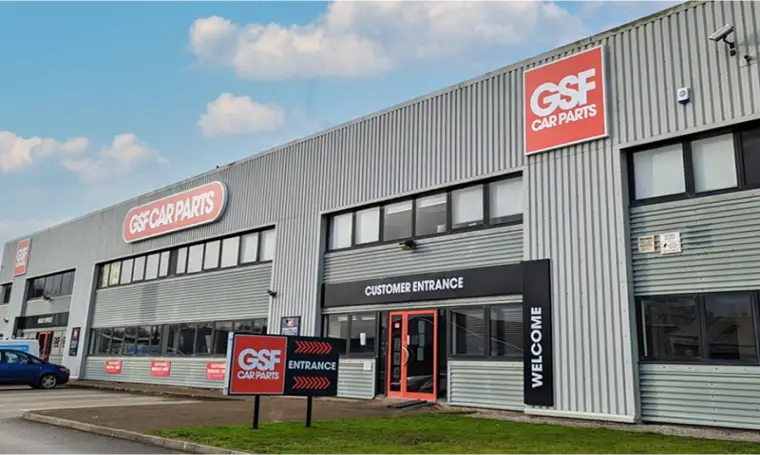
The advice here comes from the other side of the counter. Net Solutions built and still evolves the platform behind Euro Car Parts, which processes between 12,000 and 15,000 orders a day, and rebuilt GSF Car Parts’ storefront on Adobe Commerce. Start with what you would be taking on: the work the channel does for you today.
Distributors Provide Five Capabilities Beyond Logistics
Be honest about what distributors do besides moving boxes. When you sell direct, you must rebuild, keep with a partner, or redesign each capability below.
| Capability | What the channel does today | Where this article covers it |
|---|---|---|
| 1. Fitment | Matches your part to a specific vehicle at the moment of purchase | Capability 1 |
| 2. Availability | Promises this part, at this counter or on this van, by this time | Capability 2 |
| 3. Returns and warranty | Absorbs returns and warranty claims | Capability 3 |
| 4. Trade credit and the workshop relationship | Extends credit and holds the day-to-day relationship with workshops | Channel terms and Capability 4 |
| 5. Demand aggregation | Gathers demand across hundreds of brands, so no single manufacturer has to win the buyer's attention alone. | The contribution test |
Trade credit is the capability a direct program is least likely to rebuild. Consumers pay at checkout, and workshops can keep buying on account through their distributor. Settle it explicitly in the channel terms rather than leaving it to chance.
None of this is unbuildable, but it’s all real work. You don’t have to take it all on at once, and most manufacturers shouldn’t. The first decision is which pieces you take on, and it has more than two answers.
Direct Is a Spectrum, Not a Switch
The word “direct” hides four different operating models. They differ in who owns each step of the journey: discovery, fitment, checkout, stock and delivery, installation, and aftercare.
| Owned discovery | Partner-fulfilled commerce | Selective direct | Full direct | |
|---|---|---|---|---|
| Product content and discovery | Manufacturer | Manufacturer | Manufacturer | Manufacturer |
| Fitment lookup | Manufacturer | Manufacturer | Manufacturer | Manufacturer |
| Checkout and customer record | Partner | Manufacturer | Manufacturer | Manufacturer |
| Stock and delivery | Partner | Partner | Shared | Manufacturer |
| Installation | Partner | Partner | Partner | Shared |
| Warranty and aftercare | Shared | Shared | Manufacturer | Manufacturer |
| Discovery and fitment data | Manufacturer | Manufacturer | Manufacturer | Manufacturer |
| Best first use | Channel-sensitive categories, lowest conflict | Own checkout and the customer relationship without building logistics | Premium, launch, bundle or channel-gap lines | Strong brand pull and proven contribution |
Owned Discovery: You Run the Search, a Partner Takes the Order
The manufacturer runs the product content, the fitment lookup, and a where-to-buy journey. The order goes to a distributor, retailer, or installer. This is the least disruptive model, and it already works.
Bosch partner traffic sends shoppers by deeplink straight to the matching product page on GSF Car Parts, whose storefront we rebuilt. Bosch owns the discovery. GSF owns the transaction. Neither had to change the channel to get there.
Choose it when: the category is channel-sensitive, and you want the lowest possible conflict.
Partner-Fulfilled Commerce: You Own the Checkout, a Partner Delivers
The manufacturer runs the brand site and the checkout and holds the customer relationship. A distributor or installer holds the stock and delivers or fits the part. You gain the customer record and the order data without duplicating a logistics network.
Choose it when: you want the customer relationship and the order data without building logistics.
Selective Direct: You Fulfill Selected Lines Yourself
The manufacturer fulfills selected lines itself: premium or performance ranges, new launches, bundles, or categories the channel does not stock economically. Fast movers stay with distribution.
Choose it when: a premium, launch, bundle, or channel-gap line justifies its own fulfillment.
Full Direct: You Own the Whole Journey
The manufacturer owns discovery, checkout, stock, delivery, and aftercare, though installation may still route through a workshop partner. This is what most people picture when they say D2C, and it is the right answer for very few categories.
Choose it when: the brand has strong consumer pull, and the contribution is already proven.
Most manufacturers will run more than one model at once, chosen product by product and market by market. Making that choice is the work of the next section.
Decide the Model and Prove the Economics Before You Build
Before anyone designs a catalog integration, answer the questions the platform cannot answer for you. Four steps will settle them: the commercial questions, the channel terms, the contribution test, and the first-category choice.
Answer Four Commercial Questions First
- Scope: Which market and which product category are in scope?
- Fitting: Does the target buyer fit the part themselves, have it fitted, or both?
- Order ownership: Who is merchant of record, and who holds the stock?
- Aftercare: Who handles returns, warranty claims, and recalls?
Agree the Channel Terms Before the Build Starts
Channel conflict stops many direct programs, and the concern is legitimate. The channel still sells most of your volume, and it talks. The answer is not secrecy. It is an agreed commercial model that settles four things:
- Which products go direct and which stay channel-priority
- Whether installation routes through the existing workshop network
- What partners earn on referred or fulfilled orders, whether as leads, orders, or fulfillment fees
- How your own sales team is paid when a direct order lands in their territory
Euro Car Parts shows what trade routing looks like in practice. Its “Fit It For Me” checkout lets a retail buyer book a local garage to fit the part during the purchase. The workshop wins the job instead of losing the sale, turning the trade from victim to beneficiary. Capability 4 covers how the platform enforces these terms. First, check that the terms leave you any margin.
Run the Contribution Test on One Category
Direct contribution is what remains of each sale once every cost the channel used to carry lands on you:
Direct contribution = net selling price − product cost − customer acquisition − payment fees − pick and pack − parcel freight − customer service − returns − warranty − partner compensation
Run it for the first category, not the whole catalog. Watch customer acquisition closely: the channel absorbed that cost for you through demand aggregation, and on a direct site you pay it yourself.
A technically excellent channel with negative contribution is a failed channel with good engineering.
Launch a Category, Not a Catalog
The category you pick decides most of the answer. Score each candidate on six criteria:
- Consumer brand pull
- Parcel economics
- Fitment confidence
- Installation complexity
- Returns exposure
- How well the channel already covers the category
Two examples show how far apart categories can sit:
| Criterion | Performance air intake | Clutch kit |
|---|---|---|
| Demand | Consumer search demand | Ordered by the trade on the morning of the job |
| Shipping | Ships by parcel | Heavy |
| Installation | Fits in a driveway | Fitted in a workshop |
| Value | Order value absorbs support costs | Attractive margin, but margin alone does not fix the economics |
| Verdict | Strong first candidate | Own discovery, not fulfillment |
Long-tail and discontinued lines are the traditional wedge, because they extend the channel rather than attacking it. They often fail the contribution test, though: low demand, poor parcel economics, awkward fitment, and no repeat purchase. A premium range, a new launch, a service bundle, or a category with a visible regional gap will often beat the long tail.
When Direct Fulfillment Fails the Test
If direct fulfillment fails the math, don’t surrender the consumer journey. Owning discovery, fitment, registration, and the customer record while a partner fulfills is a legitimate outcome, and often the best first one. Whichever model you choose, it runs on the same five capabilities.
Five Capabilities Every Direct Model Depends On
Once you choose the model, the question shifts from “what should we own?” to “what must we build to own it well?” Five capabilities answer it, and how much of each you need depends on the model.
| Capability | Owned discovery | Partner-fulfilled | Selective direct | Full direct |
|---|---|---|---|---|
| 1. Fitment | Yours | Yours | Yours | Yours |
| 2. Availability promise | Partner's | Yours, on partner stock | Yours, for direct lines | Yours |
| 3. Trust and aftercare | Content and guidance | Yours, with partner fulfillment | Yours, for direct lines | Yours |
| 4. Channel rules | Routing to partners | Partner roles and pay | Which lines go direct | Full commercial model |
| 5. Demand data | Searches and fitment failures | Plus customers and orders | Plus demand and returns on direct lines | The full picture |
Fitment comes first, because every model needs it.
Capability 1: A Catalog That Answers the Fitment Question
Structured product data is not the same as a fitment service a consumer can trust. Manufacturers sit closest to product truth: specifications, OE (original equipment) references, intended applications, supersessions, technical documents, and known exclusions. That is a real structural advantage, and it is often overstated.
Industry Data Standards Are Not a Fitment Service
- ACES (Aftermarket Catalog Exchange Standard) and PIES (Product Information Exchange Standard): North American standards for exchanging fitment and product data between trading partners. They are not databases of your applications. The Auto Care Association is explicit that a supplier must still research, create, or buy its own application data.
- TecDoc: The European equivalent combines manufacturer-supplied product data with shared vehicle reference data, standard classifications, and validation.
Distributors and data aggregators work from what you publish, but they own the service that answers the buyer’s question, not you.
What a Consumer-Ready Fitment Service Has to Do
Going direct means turning your data into that service. It has to:
- Take a VIN (vehicle identification number) or registration
- Resolve the exact vehicle
- Return your part with a clear level of confidence
- Keep every qualifier and exclusion intact along the way
- Handle ambiguity instead of hiding it
The last step is where most lookups fail. The same model year can carry two brake disc sizes, depending on engine and trim. A lookup that returns both without saying which is a returned order waiting to happen.
RECOMMENDED READING

GSF Car Parts Shows the Standard Buyers Already Expect
When we rebuilt GSF’s search around vehicle compatibility, its zero-result rate fell from 2.16 percent to 0.73 percent. Its vehicle-specific repair kits go further: “Add to basket” stays disabled until every component is confirmed compatible. Buyers will judge your fitment service against that standard.
Get fitment right, and your direct channel answers with product authority only the manufacturer has, instead of relying on a reseller’s reading of your data. Get it wrong, and you prove, publicly, that even the manufacturer cannot say what fits. Once you can say what fits, you have to say whether it is there.
Capability 2: Availability You Can Promise
A direct channel that shows stock it does not have, or cannot say when a part will arrive, burns brand trust that took decades to build. It burns that trust with your most engaged customers: the ones who specifically sought out your brand. A buyer who sees “in stock” on your site and “awaiting supplier” in the confirmation email will not come back, and will tell the forum why.
Connect Live Stock Data Before You Design the Storefront
First, build three things:
- Live inventory positions from your ERP and 3PLs, or from the partner fulfilling for you
- Honest delivery promises based on where the part actually sits
- Order orchestration that routes each order to the location holding the part
In a partner-fulfilled model, this integration is the whole product: you make the promise, and they hold the stock. GSF moved its stock refreshes from four to six times a day and added real-time validation against its distribution centers at checkout. As a result, failed and invalid orders fell. This is unglamorous pipeline work, and it separates a working channel from a complaint generator.
What this means for your business: in every model except owned discovery, the availability promise is yours even when the stock is not. Budget the integration before the storefront, not after.
Once the part is right and the promise is honest, the buyer’s remaining question is whether to trust you with the aftermath.
Capability 3: Trust, Authenticity, and Aftercare
Sell Accountability, Not Warranty Fear
It is tempting to build the direct channel on warranty fear: buy from the manufacturer, and your car’s warranty is safe. Do not. A vehicle warranty and a parts warranty are different things. In the United States, the Federal Trade Commission is explicit that using an aftermarket part does not by itself void the vehicle warranty.
Worse, a buyer worried about warranty instinctively turns to the dealer, which is the wrong direction for an independent aftermarket brand. Fear is not your asset here. Accountability is.
What Buyers Expect From a Manufacturer Channel
Buyers expect more certainty from the manufacturer than from an anonymous marketplace listing. Give them:
- Proof that the part in the box is genuine
- A product warranty stated in plain terms
- Registration that keeps traceability for claims and recalls
- Installation guidance tied to the exact vehicle
- A route to a qualified installer when the job needs one
Counterfeit and gray-market stock erode both revenue and safety. Authentication built into the channel is the strongest answer you can ship. This capability scares most manufacturers more than the technical ones.
Capability 4: Channel Rules the Platform Enforces
You agreed on the commercial model before the build. This capability makes it stick. If the rules live in a PDF instead of the platform, the first regional sales team under quota pressure will break them.
Keep Direct Pricing Inside Competition Law
Your direct-channel prices, promotions, and partner compensation should be commercially coherent and reviewed for competition law. Your resellers must remain free to set their own selling prices.
- Selective distribution agreements are legitimate and do not usually raise competition concerns on their own.
- They cannot be used to impose resale prices.
- In the UK, the Competition and Markets Authority treats restricting a reseller’s price, or its ability to discount online, as unlawful resale price maintenance.
Encode the Agreed Model in the Platform
Put the rules where the system applies them automatically:
- Account structures
- Catalog segmentation
- Routing logic
- Direct-channel pricing and partner-compensation rules
The platform enforces the model; it does not create it. Rules that hold also make the last capability possible, because the data only flows if the channel keeps running.
Capability 5: The Feedback Loop Only You Can Own
The quiet prize of going direct is not only the margin on direct orders. It is first-party data about your own products. Today, much of that intelligence sits fragmented across channel-partner systems, arrives months later in aggregate, or never connects to a vehicle or a customer.
What a Direct Channel Lets You See
How much you see depends on the model:
- In every model, including owned discovery: which vehicles and products buyers search for, where fitment fails, and the installation questions buyers ask
- Once you own the transaction: real demand by region and the return patterns on your own parts
Where the Data Pays Back
Instrument the channel from day one, and feed what it shows into decisions the channel cannot inform for you:
| What the channel shows you | Decisions it can inform |
|---|---|
| Searches by vehicle and product | Catalog coverage, new product launches, and marketing |
| Fitment failures | Corrections to catalog and fitment data |
| Installation questions | Installation guidance and product design |
| Regional demand | Forecasting and regional assortment |
| Return patterns | Product quality and warranty review |
Measure the Business Case Beyond Direct Revenue
That is why you should never measure the business case on direct revenue alone. A manufacturer that goes direct without instrumenting the channel takes on the full channel risk and collects only part of the return. That completes the capabilities. Here is what they look like from the side of the counter that already runs them.
Net Solutions Built the Channels Your Direct Site Will Be Measured Against
Net Solutions comes at this from an unusual angle: we engineered the channels the aftermarket already buys through.
- Euro Car Parts: We built and still evolve the platform behind Euro Car Parts, the UK’s leading parts distributor. More than 60 integration modules connect vehicle identification and fitment, live inventory, payments, search, marketplaces, and installer booking.
- GSF Car Parts: We rebuilt GSF’s storefront on Adobe Commerce. The overhaul included vehicle-aware search and fitment-validated bundles, and monthly online order volume doubled after it.
60+
integration modules
Euro Car Parts platform
15,000
orders a day
Peak daily orders through the Euro Car Parts platform
2x
monthly online orders
GSF Car Parts after the storefront rebuild
These figures are combined effects of the rebuilds, not of any single feature. Those platforms don’t prove every manufacturer should sell direct. They show the standard a manufacturer channel must meet because your buyers use it today: fitment-aware search, live inventory across hundreds of branches, installer booking at checkout, and fulfillment at volume.
We build commerce infrastructure for the whole aftermarket: distributors, retailers, and manufacturers alike. We have no position on who should win the channel. We have strong opinions, backed by delivery, on what it takes to build a channel that works. And whichever partner fulfills for you, this is the kind of system you will integrate with.
A Realistic First Year: One Market, One Category, Four Phases
Do not launch a flagship. Pick one market and the category that passed your contribution test. Then build in four phases, and instrument everything from day one.
Phase 1: Decide the Model, the Category, and the Channel Terms
- Choose the market and the first category
- Choose the direct model for that category
- Run the contribution test
- Agree the commercial terms with distributors and installers
Phase 2: Build Fitment, Availability, and Checkout
- Turn your product data into a fitment-capable catalog
- Connect live availability from your ERP, 3PLs, or fulfilling partner
- Build the checkout and order routing your model requires
- Encode the channel rules in the platform before the first order ships
Phase 3: Launch the Pilot With Trust and Aftercare in Place
- Have warranty terms, registration, and installation guidance live from the first order
- Route installation through the workshop network where your model calls for it
Phase 4: Measure, Then Size the Second Phase
Measure more than direct revenue. Track the questions buyers ask, where fitment fails, and how the channel reacts, and let those findings size the second phase.
A program built this way is defensible to your distributors, your board, and your buyers at the same time.
Decide Which Journeys You Own While the Choice Is Still Yours
Distributor private label will keep moving into the categories where your margin lives, whether or not you go direct. Manufacturers who decide now, category by category, choose which parts of the journey they own. Manufacturers who wait will find those choices narrowed.
Questions Manufacturers Ask Before Going Direct
It will strain them if you announce it as competition and engineer it as an afterthought. Relationships tend to survive when you agree the model first, route installation and often fulfillment through the trade, and let the platform enforce the rules rather than relying on promises. Distributors have seen manufacturers go direct badly. Showing them the model and the architecture persuades them more than showing them a policy.
No. Owning discovery, fitment, and the customer record while a partner fulfills is a direct model, and for many categories it is the better one. The test is what you own, not what you ship.
No. Marketplace listings operate within someone else’s customer relationship and limit what you own of customer data, margin structure, and the aftercare experience. Marketplaces are a demand channel. They are not the fitment-authoritative, instrumented channel this piece describes, and they give you far less visibility into your installed base.
Not necessarily, because the storefront is rarely the hard part. The hard parts sit upstream:
- Turning your own product data into a catalog that answers fitment questions
- Integrating live with your ERP, logistics, or a fulfillment partner, so availability is honest
- Building the account and pricing architecture that keeps channel rules enforceable
Assess those first, because they decide whether your current platform can carry a direct channel. Treat this as a build program with a storefront at the end, not a storefront program with integrations bolted on.
A single-market, limited-catalog pilot can often launch within a few quarters when fitment data, inventory visibility, and fulfillment operations are already usable. When product data is weak, ERP systems are fragmented, or consumer operations don’t yet exist, it takes longer. A readiness assessment should establish which case you are in before anyone commits to a date. The programs that take years are the ones that launched the storefront first and spent the years rebuilding underneath it.
Which direct model fits your first product category?
60 minutes with a senior commerce engineer who has built the aftermarket's buying channels from the inside. Bring your catalog and your channel questions. We will work out which of the four direct models fits your first product category, where the economics and the channel risk sit, and what would have to be true to run a controlled pilot. No pitch deck.