
Executive Summary
For automotive parts distributors and eCommerce operators, high order volume without high average order value (AOV) is a profitability trap. The root cause isn’t low traffic or poor pricing; it’s a failure to guide customers to a complete repair solution. This blog explores why generic upsell tactics fall flat in the automotive aftermarket, the real trade-offs of building smarter digital experiences, and how leading operators are using relational data, virtual garages, and job-in-a-box logic to turn single-part transactions into complete-repair baskets. If your site is busy but your margins are thin, this is for you.
Key Takeaways
- High traffic ≠ high profitability. Low AOV on single-item orders erodes margins through shipping costs and warehouse overhead, and with customer acquisition costs plateauing, growth has to come from the basket, not the funnel.
- Generic upsells destroy credibility in automotive. Recommending floor mats to someone buying a head gasket signals a lack of expertise. The real opportunity is to complete the repair, not to pad the cart.
- The incomplete repair is both a revenue and a trust problem. Customers don’t know what they don’t know, and when they’re stranded mid-repair, they blame the retailer rather than their own oversight.
- Job-in-a-Box logic fixes the basket, but only with the right data foundation. Relational catalogue data and vehicle-specific fitment logic are prerequisites; static SKU lists won’t get you there.
- Consumer loyalty is shifting fast. As vehicles age and cost pressures mount, more buyers are moving away from original equipment (OE) parts toward independent aftermarket alternatives. Distributors who don’t reflect this shift in their digital experience will feel it in their conversion rates.
- AOV is a helpfulness metric. In a mature market, a low average order value signals that your digital storefront is leaving customers to figure out complex repairs on their own, which directly impacts lifetime value.
The global automotive aftermarket is under pressure from both ends. Aging fleets are sustaining parts demand, but cost pressures are reshaping buying behaviour, pushing more buyers toward IAM brands over OE alternatives and raising the bar for what a digital experience needs to deliver. IAM (Independent Aftermarket) branded parts are now favoured by 57% of global respondents over Original Equipment (OE) alternatives, a meaningful shift that has real implications for how distributors position their product mix and price architecture.
The rise of BEVs and ADAS is adding another layer of complexity, creating a capability gap that risks splitting the market into those who can navigate technical change and those who can’t.
And then there’s the personalisation gap. Most distributors know their website is critical, but far fewer feel confident it’s actually performing. That’s exactly where AOV problems live.
Because in the automotive aftermarket, being busy isn’t the same as being profitable. High traffic and high transaction volumes can still produce dangerously thin margins. The culprit isn’t pricing or platform competition – it’s the structural mismatch between how most automotive e-commerce stores are built and how customers actually buy parts. Most aren’t mechanics. They’re a DIYer on a Saturday morning or a small garage owner with a job due by noon. They buy what they know they need, and miss what they don’t.
This blog unpacks why that happens, what it costs, and what the smartest operators are doing about it.
Opening Scenario: The Acquisition Plateau
Imagine a mid-market automotive parts distributor that has spent the last three years aggressively scaling its digital storefront. By 2026, they’ve reached a frustrating equilibrium: traffic is high, but the cost to acquire each new customer has plateaued. Every marginal pound spent on marketing is returning less than it used to.
The leadership team realizes that growth can no longer come from finding new customers; it has to come from the ones already standing at the digital counter. However, the Average Order Value (AOV) is stubbornly low. Customers are coming in for a single “distress purchase”, a broken tail light or a single spark plug, and leaving. The company is processing thousands of transactions, but the shipping costs and warehouse labor on these small, single-item orders are eroding the bottom line.
The Hidden Problem: The “Incomplete Repair” Friction
Most customers don’t know what they don’t know, and that’s your problem as much as theirs. The non-obvious challenge in automotive e-commerce is that most customers aren’t automotive experts; they are DIYers or small shop owners looking for a fix. When a customer buys a single radiator, they often forget the coolant, the hoses, or the clips required to actually finish the job.
This isn’t just a missed sales opportunity; it’s an operational hazard. When that customer realizes mid-repair that they are missing a £5 component, their frustration isn’t directed at their own forgetfulness—it’s directed at the retailer who didn’t remind them. The hidden cost of a low AOV isn’t just lost revenue; it’s the high rate of customer dissatisfaction and the logistical “death by a thousand cuts” caused by shipping small, individual parts.
Why Does This Matter More in Automotive Than Other Sectors?
Automotive is one of the few sectors where a wrong or incomplete order has real-world consequences. A customer who forgets a dress shoe doesn’t get stranded on a driveway. A customer who forgets a tensioner bolt when replacing a timing belt might be looking at engine failure.
That stakes differential is precisely why the automotive aftermarket needs a different e-commerce logic than fashion or electronics. Generic ‘you may also like’ carousels don’t cut it here. What’s needed is technically informed, vehicle-specific guidance baked into the buying journey, not bolted on as an afterthought.
Why Do Common eCommerce Upsell Tactics Fail in the Automotive Aftermarket?
Because they’re built for general retail, not technical repair sequences. Traditional eCommerce logic suggests using ‘Frequently Bought Together’ carousels based on general user behaviour. In the automotive aftermarket, this logic is often useless. Showing a customer ‘popular floor mats’ when they are looking at a head gasket kit signals a lack of technical expertise.
The same problem applies to AI-powered recommendations without deep automotive context and vehicle-specific data; generic AI suggestions can actively damage brand trust rather than support the sale.
Furthermore, many retailers try to solve the AOV problem by offering site-wide discounts. This often backfires by training customers to wait for sales, further thinning margins without actually solving the problem of incomplete baskets. Generic discounting is a blunt instrument for a problem that requires surgical precision.
What Makes Automotive Upsell Logic Different?
Three things set automotive cross-sell logic apart from standard retail:
- Vehicle specificity. A part that fits a 2018 Ford Focus diesel is not the same as one that fits a 2018 Ford Focus petrol. Any recommendation engine that ignores VIN or Make/Model/Year data is essentially guessing.
- Repair sequence logic. Parts don’t exist in isolation. A timing belt replacement almost always requires a water pump and tensioners at the same time. A cross-sell that doesn’t understand repair sequences will always underperform.
- Functional completeness. The goal isn’t to push extra products; it’s to ensure the customer has everything they need to finish the job. That’s a fundamentally different mindset to ‘increase basket size.’
The Real Trade-Offs: Complexity vs. Conversion
To move the needle on AOV, the distributor must choose between system simplicity and “Job-in-a-Box” logic.

- The Decision: Grouping disparate SKUs into functional “Repair Kits” (e.g., a “60k-Mile Service Kit”). Additionally, implementing a gated “Frontend Stepper” that disables the “Add to Basket” button until the system validates that all required components in the repair sequence are compatible with the user’s specific Vehicle ID.
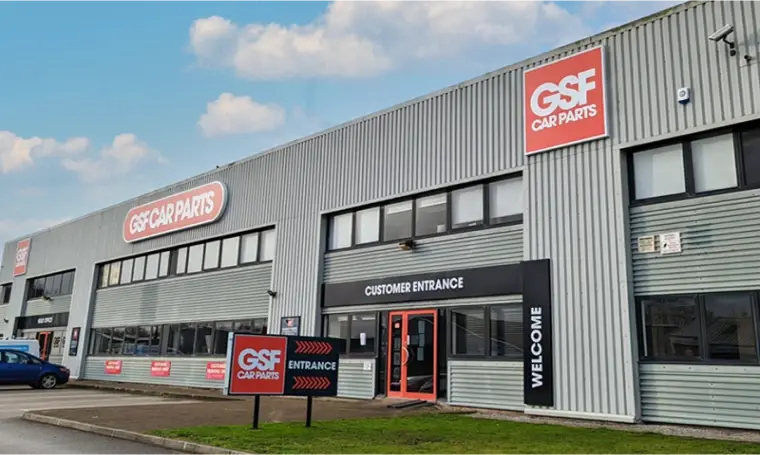
- The Gain: Absolute fitment certainty. This automates the role of a seasoned parts advisor and slashes return rates and reverse-logistics costs. The business sees a significant jump in Units Per Transaction (UPT) and a better customer experience, as buyers get everything they need in one click. This is how a leading UK’s largest car parts retailer transformed its eCommerce platform and re-engineered its digital ecosystem from the ground up.
- The Risk: Increased “Path to Purchase” friction, as you are asking the customer to complete three steps instead of one. There is also high operational complexity: the warehouse must now manage “virtual kits” in which components might be stored in different zones, and the digital catalog must be perfectly mapped to ensure that every part in that kit is compatible with the user’s specific vehicle. The business must decide if the increased warehouse “pick-and-pack” complexity and initial UX friction are worth the significantly higher transaction value and reduced return rate.
The business must decide if the increased warehouse “pick-and-pack” complexity and initial UX friction are worth the significantly higher transaction value and reduced return rate.
What Are the Hidden Operational Costs of Low AOV in Automotive eCommerce?
Implementing high-AOV triggers like “Free Shipping Thresholds” or “Tiered Pricing” sounds simple on a whiteboard, but the operational reality is more rigid:
- Legacy Data Constraints: Most legacy catalogs are built on static text rather than relational data. If your system doesn’t “know” that a specific oil filter requires a specific drain plug, it cannot trigger a cross-sell.
- The Shipping Threshold Trap: Setting a free-shipping threshold at £50 when your average item costs £48 creates a “friction point.” If the system doesn’t immediately suggest a £5 add-on (like a cleaning rag or a bottle of additive), the customer is more likely to abandon the cart than hunt for a filler item.
- The Development Margin: Custom-building these features can be prohibitively expensive. Smart operators prioritize platforms like Adobe Commerce that offer native tiered pricing and gift rules to avoid “developer lock-in.”
Our Whitepaper on the Automotive Industry is a deep dive into how automotive distributors can break down data silos, build relational catalogue infrastructure, and unlock the personalized experiences that drive AOV. Essential reading if your data isn’t working as hard as your team is.
How Do Smart Operators Actually Improve AOV in the Automotive Aftermarket?
The short answer: they stop thinking like retailers and start thinking like repair advisors.
Experienced teams shift their focus from “selling parts” to “enabling repairs.” They leverage “Virtual Garage” data to ensure that every recommendation is filtered through the specific Make, Model, and Year of the user’s vehicle.
Instead of a generic upsell, they use predictive maintenance logic. If a user’s saved profile indicates a high-mileage vehicle, the system prioritizes “High Mileage” oil variants and gasket sets. They also use “Basket Cross-Sell Triggers” as a safety net, not to push extra products, but to ensure the customer doesn’t suffer the “Saturday Morning Stall” of a missing part. The “Frontend Stepper” acts as a digital consultant, ensuring that if a customer buys a timing belt, they aren’t allowed to checkout without being prompted for the water pump and tensioners that must be replaced at the same time.
What Role Does the ‘Virtual Garage’ Play in Increasing AOV?
The Virtual Garage is arguably the most valuable data asset an automotive eCommerce platform can hold. When a customer saves their vehicle, every subsequent recommendation, cross-sell, and compatibility check is anchored to that specific Make, Model, Year, and engine variant.
This does two things simultaneously: it reduces the cognitive load for the customer (they’re not hunting through fitment tables), and it gives the retailer a vehicle-specific context to work with. A system that knows you have a 2019 BMW 3 Series with a 2.0 diesel engine can serve you a fundamentally different, and far more relevant, experience than one that doesn’t.

What Is Predictive Maintenance Logic and Why Does It Matter for AOV?
Predictive maintenance logic uses vehicle mileage, service history signals, and part replacement cycles to surface recommendations before the customer even knows they need them.
For example: a customer who has bought a set of brake pads and has a high-mileage vehicle profile might also be shown brake fluid, caliper lubricant, and bleed nipples, not because they searched for those things, but because the system knows those components typically need attention at the same service interval. That’s not cross-selling. That’s genuinely useful advice.
Closing Insight: Solving for the Outcome
In a mature market, AOV is a metric of helpfulness. If your average order value is low, it’s often a sign that you are leaving your customers to figure out complex repairs on their own.
By moving from a “vending machine” model to a “consultative” digital storefront, you aren’t just increasing the size of the basket; you are reducing the likelihood of returns and increasing the lifetime value of the customer. Profitability in 2026 isn’t about getting more people to the site, it’s about ensuring that every person who arrives leaves with a complete solution, not just a single part.