HomeLink International has been running home exchanges since 1953, four decades before anyone called it the sharing economy. The model has not changed much and does not need to: you stay in my home, I stay in yours, funded by an annual membership rather than a nightly rate. What had changed was everyone’s expectation of the software.
The platform underneath was a monolith, and it was costing the business at both ends. Prospective members hit a cluttered onboarding path and left before finishing a listing. Country managers, the multilingual local organisers who hold the network together, were manually checking payment receipts and editing subscription expiry dates in the database, then waiting on developers to change a word on a translated page.
Net Solutions rebuilt the platform as a composable application: a React front end decoupled from a Python and Django backend through a RESTful API layer, with spatial search rebuilt for global property queries, subscription billing automated through Stripe and PayPal webhooks, four tiers of role-based access, and a translation console structured page by page instead of keyword by keyword.
Within the first month after launch, the simplified onboarding and dashboard trust indicators produced a 20 percent trial-to-paid conversion rate.
A sixty-year-old network with members in seventy countries had exactly the problems a monolith accumulates: slow where it mattered most, manual where it should have been automatic, and dependent on developers for changes that should have taken a regional manager two minutes.
Cluttered layouts and dated navigation buried the steps that matter: profile creation, the listing wizard and identity verification. Trial members dropped out partway through, which in a subscription community is the most expensive failure there is, because the entire relationship depends on getting past that first week.
Large-scale international property searches and dynamic mapping queries ran into high latency and database slowdowns. Discovery is the product in a home exchange network, and it was the slowest part of the experience.
Checkout was not automated, so country managers were manually reconciling third-party payment receipts and overriding subscription expiry dates directly in the database. Every renewal was an opportunity for a data entry error.
Localisation relied on hardcoded individual keywords rather than page-structured content. A regional manager who wanted to fix the wording on a localised page had to raise a development request, which meant most small improvements simply never happened.
The strategy was to separate presentation from data execution, then remove humans from the loops where they were only acting as a relay.
Six systems, replacing the parts of the monolith that were costing conversions or staff hours.
We built a fast React.js interface with onboarding trackers, profile-completeness indicators and trust-verification badges. In an exchange network, a half-finished profile is worth nothing to anyone, so the dashboard makes the remaining steps visible and makes completeness something members can see in each other.
We integrated the Mapbox API for real-time map discovery, with filtering by exchange type, covering simultaneous, non-simultaneous and hospitality exchanges, alongside availability dates and custom radius boundaries. Members explore by moving the map rather than resubmitting a search.
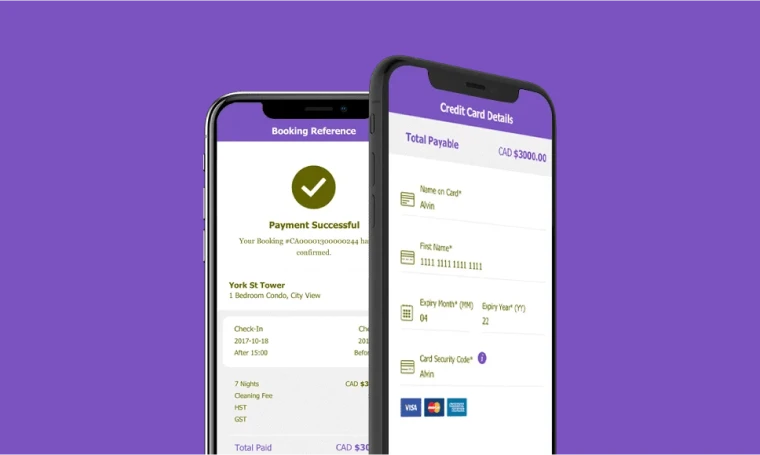
We integrated Stripe and PayPal with dynamic webhook handling. The system reconciles transaction metadata against member profiles automatically, updates subscription terms and issues digital receipts instantly, with no database overrides and no manual audit step for regional teams.
We configured granular workspace boundaries across four user types. Trial members get restricted access, paid members unlock messaging and exchange agreement tools, country managers handle regional listing and export management, and super admins control global account provisioning.
We built a centralised localisation interface where administrators edit multi-language content page by page, with no source file changes and no deployment. The people who actually speak the language and know the market can now fix the wording themselves.
We implemented a SendGrid-powered email tool with dynamic segmentation across active, trial and expired members, plus a drag-and-drop template builder with live previews, so country managers can run their own campaigns to the right slice of their market.
Automated Stripe and PayPal webhooks ended manual transaction auditing, giving regional teams back hours of work and removing the billing entry errors that came with editing expiry dates by hand.
Decoupling the front end and optimising spatial queries cut page load times and search latency substantially, which matters most on the discovery journey where members decide whether the network has anything for them.
Moving from hardcoded keywords to a page-wise translation matrix put content updates in the hands of non-technical regional managers, so localised sites can be improved continuously rather than in batches tied to development cycles.
Simplified registration and visible trust signals delivered a 20 percent trial-to-paid conversion rate in the first month post-launch, turning the weakest part of the old experience into a measurable commercial gain.
The mobile-first search foundation is built to absorb travel demand spikes around major global events, when a home exchange network sees concentrated interest in specific cities.
HomeLink’s reciprocal exchange model is unusual and deliberately non-commercial. The rebuild replaced the technology while leaving the model intact, because the thing that makes this network valuable is precisely what a generic booking platform would have flattened.
Spatial search across international property records is the hardest technical problem in this product and the one members feel first. Rebuilding indexing around the actual query pattern is what made the rest of the experience worth having.
The expensive work was never the checkout page. It was people reconciling receipts, overriding dates and waiting on developers for translated text. We automated those specifically, because that is where the hours were going.
Country managers run this network. Translation editing, email segmentation and regional administration were designed to be used by them directly, since a platform that needs a developer for routine change is only half modernised.
Monoliths rarely fail outright. They just make everything slightly slower and slightly more manual until the operational cost is invisible because it has always been there. If your team is reconciling payments by hand or waiting on releases for content changes, the bottleneck is architectural, and it is usually addressable in phases rather than all at once.
It is a peer-to-peer web application that lets verified members swap accommodation with each other. Unlike a commercial rental booking engine, it needs identity verification, reciprocal availability matching, direct member messaging and subscription management rather than per-night payment processing.
The exchange is non-monetary. Members stay in each other’s homes and pay an annual membership rather than a nightly rate, which means the software has to optimise for reciprocal search criteria, profile credibility and secure peer-to-peer communication instead of transaction volume and pricing.
It allows real-time spatial queries directly on the map, so members can filter availability within a radius, pan to a region and see results without page reloads. On large geographic datasets, that removes most of the latency a form-based search introduces.
Instead of isolated translation strings in hardcoded files, content is organised into structured, database-backed page templates. Regional managers update whole translated pages through a visual interface, with no developer involvement and no deployment.
Webhooks listen for transaction events from gateways such as Stripe and PayPal. When a payment clears, the platform verifies the metadata against the member account, extends the subscription date and issues a receipt automatically, which removes the manual audit and the database override that used to sit behind every renewal.
Role-based access separating members from administrators, usually across four tiers: trial members with limited communication access, paid members with messaging and agreement tools, regional managers with local moderation and reporting, and super admins with global settings and provisioning.

Often yes. Decoupling the presentation layer through an API boundary lets the front end be rebuilt while the core data model and business logic stay in place, so the modernisation can be phased and the existing member base is not disrupted by a single cutover.
Completion and credibility. Members convert when onboarding is short enough to finish and when they can see that other members are verified and complete. Progress tracking, profile-completeness indicators and trust badges address both, which is what produced HomeLink’s 20 percent first-month conversion rate.
It depends on how much of the business logic is entangled with the presentation layer, since that untangling usually takes longer than the rebuild itself. A phased approach shortens time to value: establish the API boundary first, rebuild the journeys costing the most conversions, then automate the operational workflows behind them.
Whether you are modernising a monolith, automating subscription billing, or building a multi-language platform that regional teams can run themselves, there is usually an engineering answer. Tell us what the bottleneck looks like and we will show you how we would approach it.
Results matter. Discover how our customized solutions have delivered measurable business outcomes for clients across various industries. Each case study highlights the strategic impact of our work, turning challenges into opportunities for growth.
Ask Sol anything about digital products, AI, engineering, or growth, and get answers drawn from years of Net Solutions thinking and experience.