The Cost of Stockouts: How Forecasting Saves Revenue and Reputation

Discover how you can fix stockouts by correcting demand data and how a 3-layer forecasting engine improves fill rates and reduces working capital.

Executive Summary

For most distributors and eCommerce operators, stockouts are treated as an inventory problem. This article argues they are a data problem, one that compounds over time if left unaddressed. Drawing on a real-world case study of an automotive parts distributor, we examine why traditional “safety buffer” forecasting systematically fails, what a three-layer demand planning model looks like in practice, and what any operator can do immediately to begin closing the gap.

Key Takeaways

  • Stockouts corrupt future forecasts. When out-of-stock periods are recorded as zero demand, the next planning cycle inherits a structurally lower baseline, perpetuating the shortage.
  • Historical averaging is a lagging indicator. Adding a 10–20% buffer to past sales does not account for lost demand, seasonal variance, or supply chain volatility.
  • A three-layer engine (true demand, safety time, and physical constraints) can reduce working capital requirements by 15% in the first quarter while improving fill rates.
  • Automated PO generation eliminates the risk of re-keying and shifts procurement teams from data entry to strategic decision-making.

The rules of distribution changed quietly, and then all at once. For most of the last decade, operators could compensate for forecast imprecision with relatively forgiving margins, patient customers, and supply chains that, most of the time, did what they were supposed to. That window is closing. In 2026, same-day expectations have migrated from e-commerce into B2B. Customers who can’t get a part, a component, or a consumable from you will find it elsewhere in minutes, and they’ll remember that they did. The businesses feeling this most acutely aren’t the ones without demand. They’re the ones with demand they can’t reliably fulfill.

Growth in 2026 isn’t a traffic problem; it’s a basket problem.

For a specialized automotive parts distributor, “more clicks” had stopped translating into “more margin.” The organization was processing thousands of orders, but a high percentage were single-item “distress purchases” that barely covered the cost of their own shipping labels. The business wasn’t failing to attract customers; it was failing to help them finish the job. The culprit wasn’t marketing or pricing; it was a forecasting model that was systematically setting them up to fail.

The Hidden Problem: The Iceberg of Stockout Costs

The non-obvious challenge is that the cost of a stockout is rarely just the value of the lost sale. Below the surface, a stockout triggers a chain reaction of “invisible” expenses.

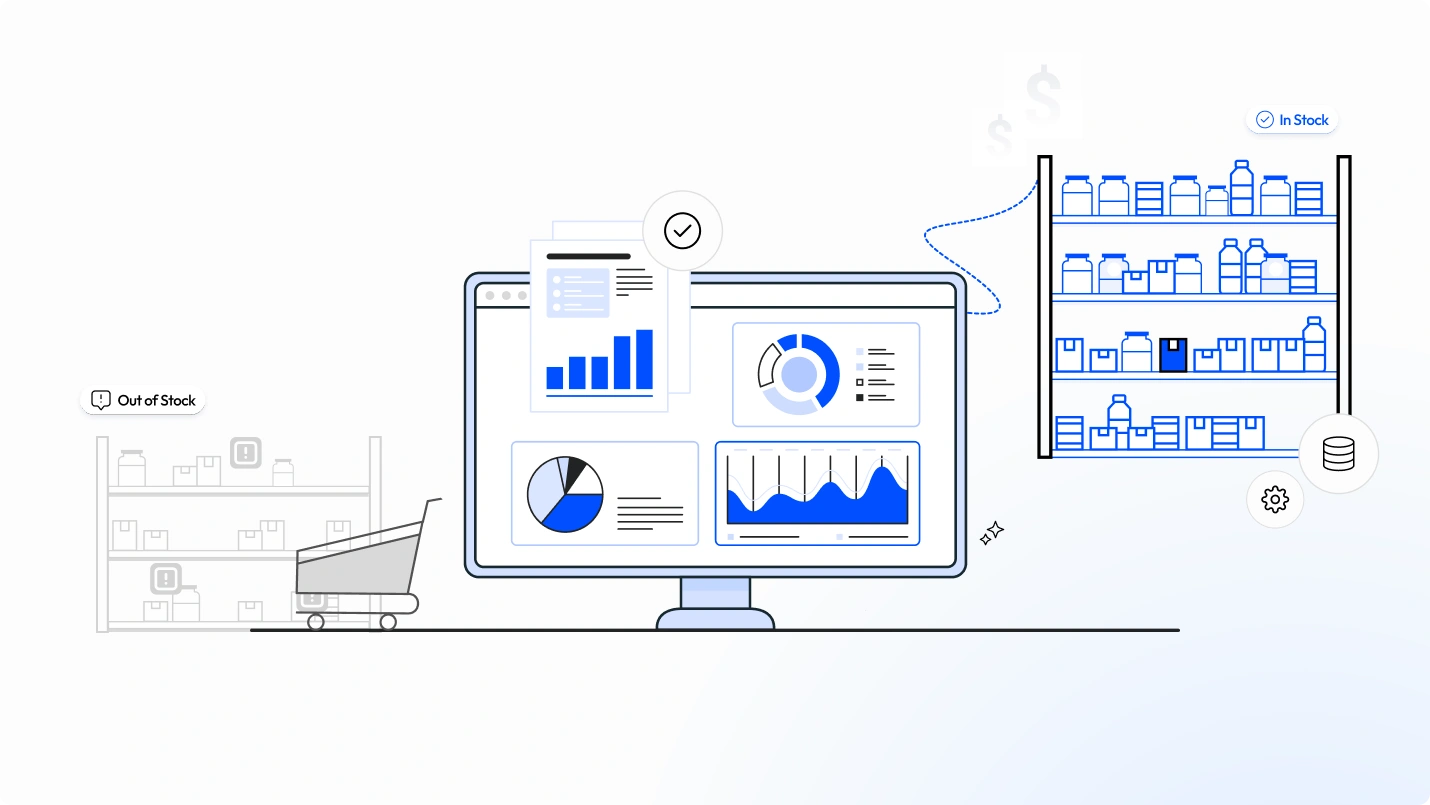
There is the operational firefighting – paying premium freight to rush a replacement. There is the customer churn – a buyer forced to try a competitor often realizes they prefer the alternative. Most critically, there is data distortion. When you are out of stock, your sales data drops to zero. If you use that “zero” to plan next month without making any corrections, your system effectively “plans to fail” again because it assumes there was no demand.

There is the operational firefighting – paying premium freight to rush a replacement. There is the customer churn – a buyer forced to try a competitor often realizes they prefer the alternative. Most critically, there is data distortion. When you are out of stock, your sales data drops to zero. If you use that “zero” to plan next month without making any corrections, your system effectively “plans to fail” again because it assumes there was no demand.

Put differently: a stockout doesn’t just cost you today’s sale. It corrupts tomorrow’s forecast. This is a primary reason why eCommerce search fails; if the system doesn’t know what should be there, it can’t guide the customer correctly.

Why Common Logic Fails

Traditional best practices rely on “Historical Averaging.” Procurement managers look at what they sold over the last six months and add a 10% or 20% “safety buffer.”

In a volatile market, this logic fails because it assumes the past is a perfect mirror of the future. It doesn’t account for the “lost demand” during previous stockouts, nor does it distinguish between a random spike and a genuine seasonal trend. This manual approach leads to the “Bullwhip Effect”: erratic swings in ordering that leave the business with too much of what it doesn’t need and none of what it does. The spreadsheet feels like control. In practice, it’s a lagging indicator dressed up as a plan.

The Real Trade-Offs: Capital vs. Continuity

The business faces a fundamental tension: how much working capital are they willing to lock away to guarantee a customer’s loyalty?

  • The Decision: Moving from manual “gut-feeling” buffers to an algorithmic demand planning engine.
  • The Gain: A 15% reduction in working capital requirements in the first quarter, releasing cash for reinvestment.
  • The Risk: Shifting from human intuition to data-driven PO generation requires a “clean slate” approach to historical data.

That 15% figure isn’t theoretical. It reflects what happens when you stop over-ordering to compensate for a broken forecasting model and start ordering to actual reconstructed demand. The distinction matters, and the next section explains the mechanics behind it.

Operational Reality: The Logic Behind the Engine

To solve this, the engine doesn’t just automate spreadsheets; it reconstructs truth from messy data. This requires a three-layered logic approach that mirrors how smart operators actually think.

Layer 1: Establishing True Demand (ANOD & MTA)

Most systems simply look at sales history. Our logic looks at what should have been sold. Average Net Orders per Day (ANOD) and Manual Trend Adjustments (MTA) work in tandem.

Layer 2: Calculating “Safety Time”

Instead of a static “Safety Stock” number, the system calculates a dynamic requirement based on the clock.

Layer 3: Physical Constraints

An engine is useless if its suggestions aren’t executable.

  • The system aligns mathematical demand with supplier realities. If the math calls for 412 units, but the Minimum Order Quantity or Master Carton size is 50, the system automatically rounds to 450. This ensures every suggested PO (purchase order) is ready for immediate warehouse intake – no manual rounding, no re-keying, no avoidable errors.

What Smart Operators Do Differently: Automated PO Generation

The culmination of this logic is the move from “data entry” to “strategic review.” Once the algorithm calculates the optimal quantity, it automatically generates the Purchase Order. This eliminates the risk of re-keying errors and significantly cuts down administrative cycle time.

For new products where no history exists, the “Cold Start” problem, smart operators use comparable-product modeling. By borrowing data from similar existing SKUs, the system can suggest accurate first-time orders, ensuring the business is protected from Day 1.

The net effect is a procurement team that spends its time on exceptions and strategy rather than on building and rebuilding order templates. The algorithm handles the routine. The humans handle the judgment calls.

Three Things You Can Do This Week

You don’t need a full forecasting engine to start closing the gaps in your current process. Here are three immediate actions any inventory manager can take:

  • Audit your last three stockout events. For each one, calculate how many days you were out of stock and estimate the lost order volume. Now look at your current reorder point for that SKU. Does it reflect that lost demand, or is it based on the suppressed sales data from the stockout period.
  • Check your supplier’s actual lead time vs. the quoted lead time. Pull the last 10 purchase orders and compare the quoted lead time to the actual delivery date. If there’s a consistent gap, your safety stock calculation is almost certainly too thin, and you’re absorbing that risk invisibly.
  • Identify your top five revenue SKUs and map their reorder triggers. For each one, ask: Is the reorder point based on reconstructed demand or on raw sales history? If it’s the latter, you have a systematic blind spot on your highest-value products.

Closing Insight: Availability as a Promise

The automotive parts distributor from our opening had a traffic problem on the surface and a forecasting problem underneath. Once they rebuilt their demand model around reconstructed true demand rather than suppressed historical sales, distress purchases fell, basket sizes grew, and working capital requirements dropped in the same quarter. The fix wasn’t more inventory; it was smarter inventory.

In 2026, inventory availability is the physical manifestation of your brand’s promise. When you rely on spreadsheets, you eventually break that promise. When you leverage intelligent forecasting, you stop “funding” safety stock and start using your inventory as a competitive engine. The winners of the next decade won’t be those with the largest warehouses, but those with the clearest vision of what their customers will need before customers even know it themselves.

Frequently Asked Questions

1. We’re a mid-sized distributor and don’t have a dedicated data team. Is demand planning software realistic for us?

More than you might think. The barrier to algorithmic demand planning has dropped significantly; most modern inventory platforms include built-in forecasting logic, and the three-layer model described in this article doesn’t require a data science team to implement. The bigger requirement isn’t technical; it’s a willingness to audit your historical data and correct for past stockout periods before you switch the system on. That’s an operational discipline, not a data engineering problem.

2. How do we handle the transition period when moving from manual forecasting to an automated system?

The most common mistake is running both systems in parallel for too long. It creates confusion about which number to trust and usually ends with the team defaulting back to the spreadsheet. A cleaner approach is to identify your top 20% of SKUs by revenue, migrate those first, and let the algorithm prove itself on the items where accuracy matters most. Once confidence builds, the remainder of the catalogue is a much easier conversation internally.

3. What if our supplier lead times are genuinely unpredictable? Does the model still work?

This is exactly the scenario the Safety Time layer is designed for. The engine doesn’t assume your supplier will hit their quoted lead time. It analyses their actual delivery history and builds the buffer around that reality. The more variable the supplier, the wider the dynamic buffer becomes. In practice, this also gives you a clear, data-backed conversation to have with suppliers about the commercial cost of their unreliability, which is often more persuasive than a general complaint about late deliveries.

Table of Contents

Related Services

Latest Insights

Stay ahead of the curve with our expert analysis, industry trends, and actionable advice. Our blog offers fresh perspectives on the challenges and opportunities in the tech landscape, helping you make informed decisions and drive innovation within your organization.