Every Landing Page Needed a Developer. We Fixed the Content Model, Not the Backlog.
Executive Summary
How Net Solutions re-engineered a global cryptocurrency exchange’s Contentful implementation so marketing could ship in minutes instead of sprints.
Client Snapshot
Industry: Cryptocurrency exchange, fintech
Reach: 70+ countries, multi-channel delivery
Platform: Contentful (headless CMS)
Engagement: Content model re-architecture, template system, performance engineering
The Problem Wasn't Contentful. It Was How Contentful Had Been Modeled.
The client had already made the right platform decision. Contentful is built exactly for what this business needed: API-first delivery to web and app surfaces, localization across dozens of markets, and editorial independence from release cycles.
None of that was happening.
Instead, the marketing team had inherited a content model that quietly turned a self-service platform into a ticketing queue. Here is what that looked like day to day.
Marketing could publish blogs. Nothing else.
Articles and blog posts were the only content types the marketing team could touch without help. Every landing page, every product page, every campaign variant went to the engineering backlog. A page that should have taken an afternoon took a sprint, and the sprint had to be negotiated against product roadmap work.
In crypto, that lag is expensive. Market conditions move in hours. A campaign that lands three weeks after the moment has passed is not a late campaign, it is a wasted one.
The content model had no landing page or product page at all.
This was the root cause hiding under the symptom. Two of the most commercially important page types on the site simply did not exist as modeled content types. Every instance of them had to be assembled as bespoke, developer-built work. The CMS was not slowing marketing down by accident, it had no representation of the pages marketing cared most about.
Content type sprawl was taxing performance and comprehension.
Over time the space had accumulated overlapping, near-duplicate content types doing subtly different versions of the same job. The result was a model that was heavy to query, confusing to navigate, and expensive to change. Every new requirement made the sprawl worse, because adding a type was always easier than reconciling the ones already there.
No guardrails meant design drift, or total lockdown.
The implementation had swung to one extreme. Because there was no structured way to give editors freedom safely, freedom was withheld. The alternative, opening everything up, would have produced inconsistent, off-brand pages within weeks. The team was stuck choosing between brand control and speed, when a well-designed model gives both.
Global scale with no systematic way to deliver it.
Serving 70+ countries across multiple channels demands a content architecture built for reuse and variation. Instead, scale was being handled through duplication and manual effort, with no confidence in how the platform would behave under concurrent editorial and consumer load.
What Net Solutions Did
We treated this as an information architecture and platform engineering problem, not a CMS configuration task. Four workstreams ran in parallel.
01.
Content Model Re-Architecture
The engineering call: consolidate with variant and type fields instead of proliferating content types.
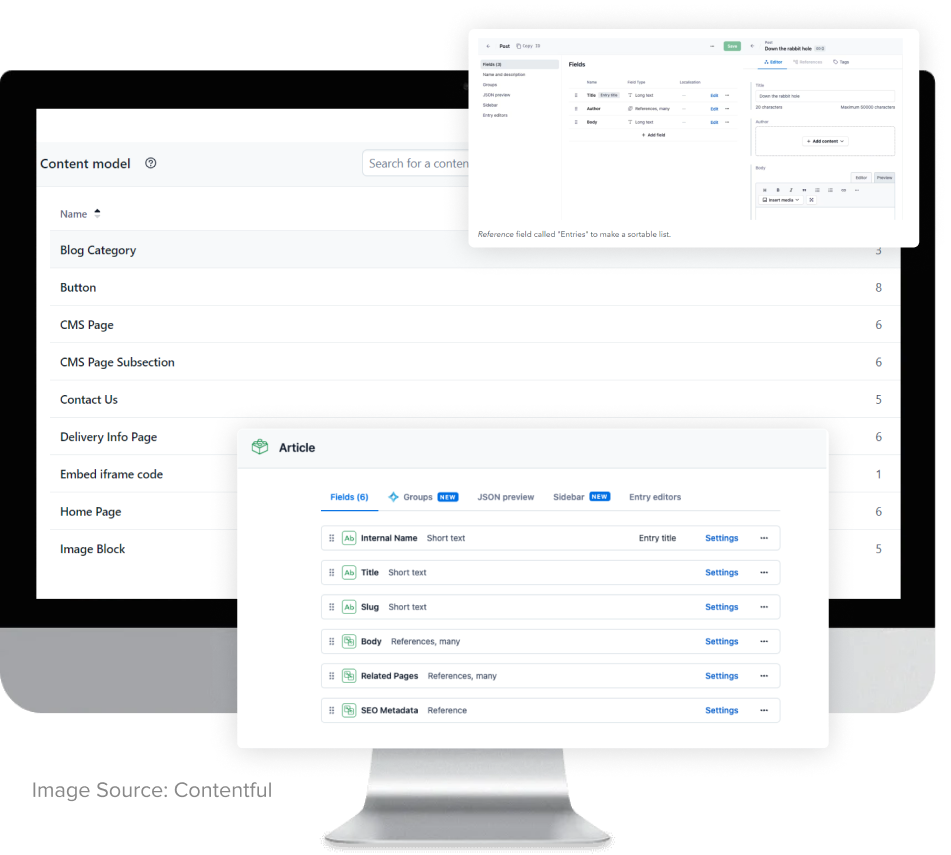
Nine of the client’s content templates were doing the same job with cosmetic differences, because the original setup had no way to express “same content, different presentation.” We merged them into a single template with a variation selector, so editors choose once and pick the style, rather than guessing which of nine lookalikes is correct.
That single architectural decision reduced content type usage from 75% to 25% of the available model surface, cut query weight, and made the space legible to a new editor in a single onboarding session.
We then built the model that should have existed from day one. Product pages and landing pages became first-class, hierarchical content types with defined taxonomy and defined relationships to the rest of the site. This is the part of a Contentful build that determines everything downstream. Get the model right and editors assemble new experiences on the fly. Get it wrong and you build a backlog generator with a nice UI.
02.
A Template and Component System With Guardrails Built In
The engineering call: constrain at the schema and layout level so freedom is safe by default.
We configured content type layouts for key page types and built a library of standardized, reusable content blocks. Editors compose pages from these blocks. They cannot compose an off-brand page, because the permitted combinations are enforced by the model itself rather than by a style guide nobody reads.
Alongside this we established brand-aligned design guidelines expressed as real constraints in Contentful: clean layout logic, simple page organization, consistent navigation patterns, and accessibility considered at the component level rather than retrofitted per page.
03.
Marketing Enablement, Measured by What Marketing Can Ship Alone
The engineering call: developer-free content generation as an acceptance criterion, not a nice-to-have.
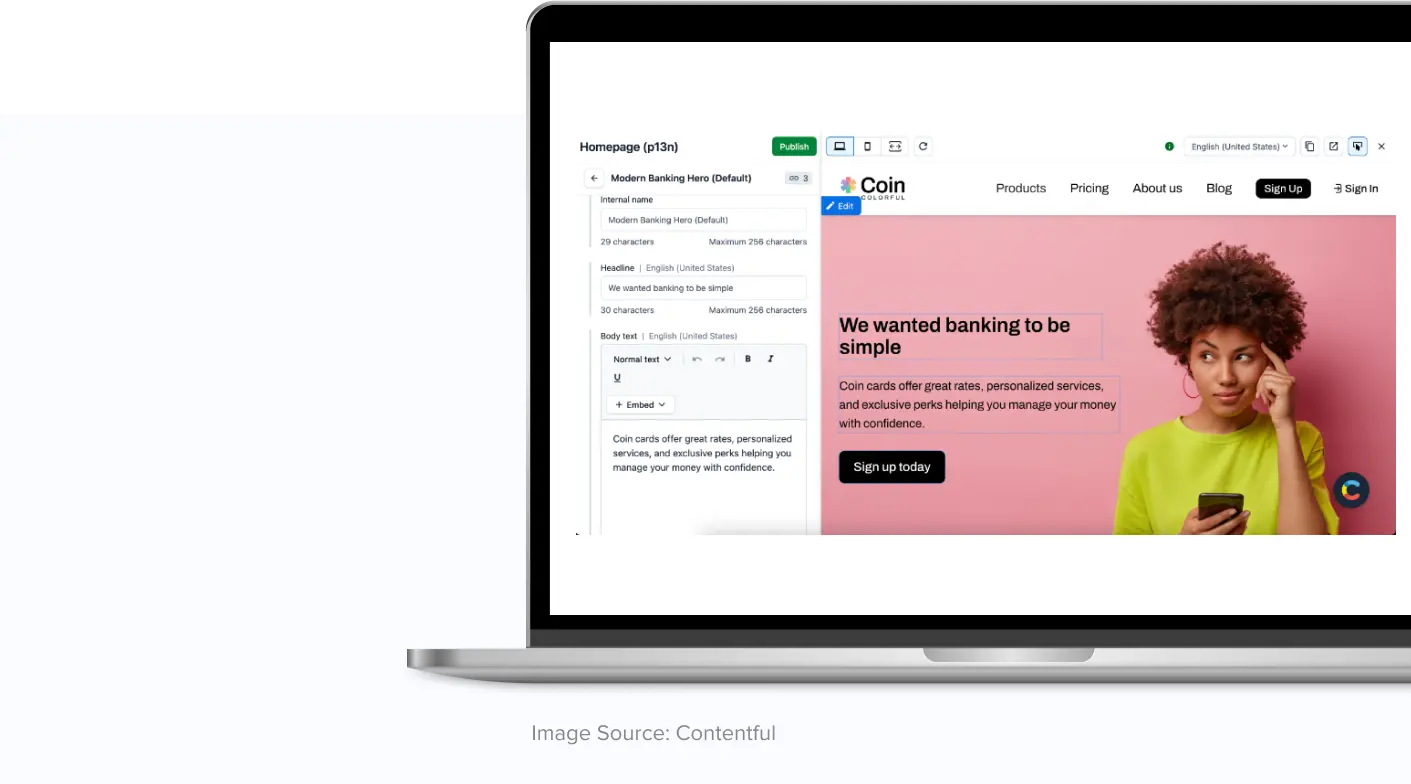
Every defined content type in the revised model is now editable by non-technical users. Landing pages, product pages, promotional modules, and campaign variants all ship without a developer, a deployment, or a ticket. Strategy can be iterated in real time, and a promotional update that used to be a sprint item is now a publish action.
The same modular structure powers multi-channel delivery across 70+ countries, with content composed once and delivered through Contentful’s APIs to every surface that needs it.
04.
Performance and Reliability Engineering
The engineering call: validate the rebuild against measured baselines, not assumptions.
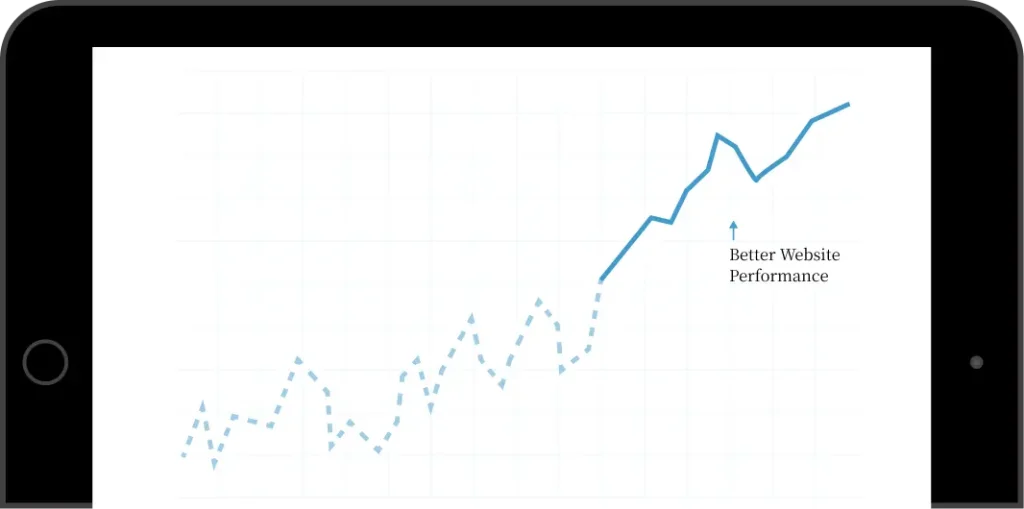
We audited performance, accessibility, and SEO using Lighthouse, GTmetrix, and Google’s own tooling, then traced and resolved the bottlenecks the audits surfaced. The lighter content model contributed directly here: fewer content types means leaner queries and faster page assembly.
We also ran concurrency testing to confirm the platform held up under simultaneous access, which matters for a business whose traffic can spike with the market rather than with a marketing calendar.
Outcomes
75% to 25% reduction in content type usage, improving database efficiency and site performance.
9 content types reclaimed through consolidation into variant-driven models.
70+ countries supported by a scalable, multi-channel content architecture.
Zero developer dependency for routine content operations across every defined content type.
Landing pages and product pages brought under marketing’s direct control for the first time.
Why This Engagement Is Representative of How We Work
Three things distinguish this build.
We diagnosed the model, not the symptom.
The stated problem was slow content updates. The actual problem was a content model missing its two most important types and carrying nine redundant ones. Fixing the first without the second would have bought a few weeks of relief.
We used the platform’s own primitives.
No custom middleware, no parallel tooling, no workarounds bolted onto the side. Variant fields, content type layouts, and taxonomy are native Contentful capabilities. Solutions built inside the platform survive upgrades, onboarding, and staff turnover.
We made autonomy verifiable.
“Marketing can now self-serve” is a claim. “Every defined content type is editable without code, validated against audited performance baselines and concurrency tests” is an outcome.
FAQs
Why did marketing need a developer for every landing page?
The content model had no landing page or product page content type at all. Those pages had to be hand built by engineering each time, because Contentful had nothing structured for editors to work from.
What does “reducing content types from 75% to 25%” actually mean?
It means the space went from using a large, sprawling set of content types down to a quarter of that footprint, mostly by consolidating nine near-duplicate types into a smaller set of shared types with variant and type fields. Fewer types to query and maintain means a faster, more legible CMS.
Does giving marketing more control risk off-brand pages?
Not with the right model. Net Solutions built brand constraints into the content type layouts and reusable content blocks themselves, so editors can only assemble pages within approved patterns. Control comes from the schema, not from a style guide people have to remember to follow.
Is this specific to crypto and fintech companies?
No. The underlying problem, a content model that never planned for the page types a business actually needs, shows up in any Contentful implementation that grew organically. The fix applies to any organization running marketing at scale on a headless CMS.
How long does a content model re-architecture like this take?
It depends on the size of the existing space and how many legacy content types need to be audited and reconciled, but the pattern is consistent: audit actual editorial use, consolidate duplicates, model the missing page types, then rebuild templates and guardrails around them.
Does this kind of rework break existing content?
Not when it is done correctly. The consolidation approach used here, mapping old content types into new variant driven types, is designed to migrate existing entries rather than discard them.
Is Your Content Model Working Against You?
Tell us what's slowing your team down. We'll show you what a properly modeled Contentful implementation could do instead.
If publishing a landing page means opening a developer ticket, the problem usually isn't your CMS, it's how it was modeled. Net Solutions builds Contentful architectures that give marketing real autonomy without sacrificing brand control or site performance. Talk to Our Team
Related Success Stories
Results matter. Discover how our customized solutions have delivered measurable business outcomes for clients across various industries. Each case study highlights the strategic impact of our work, turning challenges into opportunities for growth.
Ask Sol anything about digital products, AI, engineering, or growth, and get answers drawn from years of Net Solutions thinking and experience.
Our assistant helps you find content on our website. By asking a question, you acknowledge that we will process your data in accordance with our Privacy Policy, and consent to anonymous tracking of your conversation to help us improve the experience. Please avoid sharing personal or sensitive information, and close this page if you do not agree to these terms. While we strive for accuracy, AI responses may be inaccurate.By chatting you accept our Privacy Policy and anonymous analytics. Do not share sensitive information. AI answers may be inaccurate.