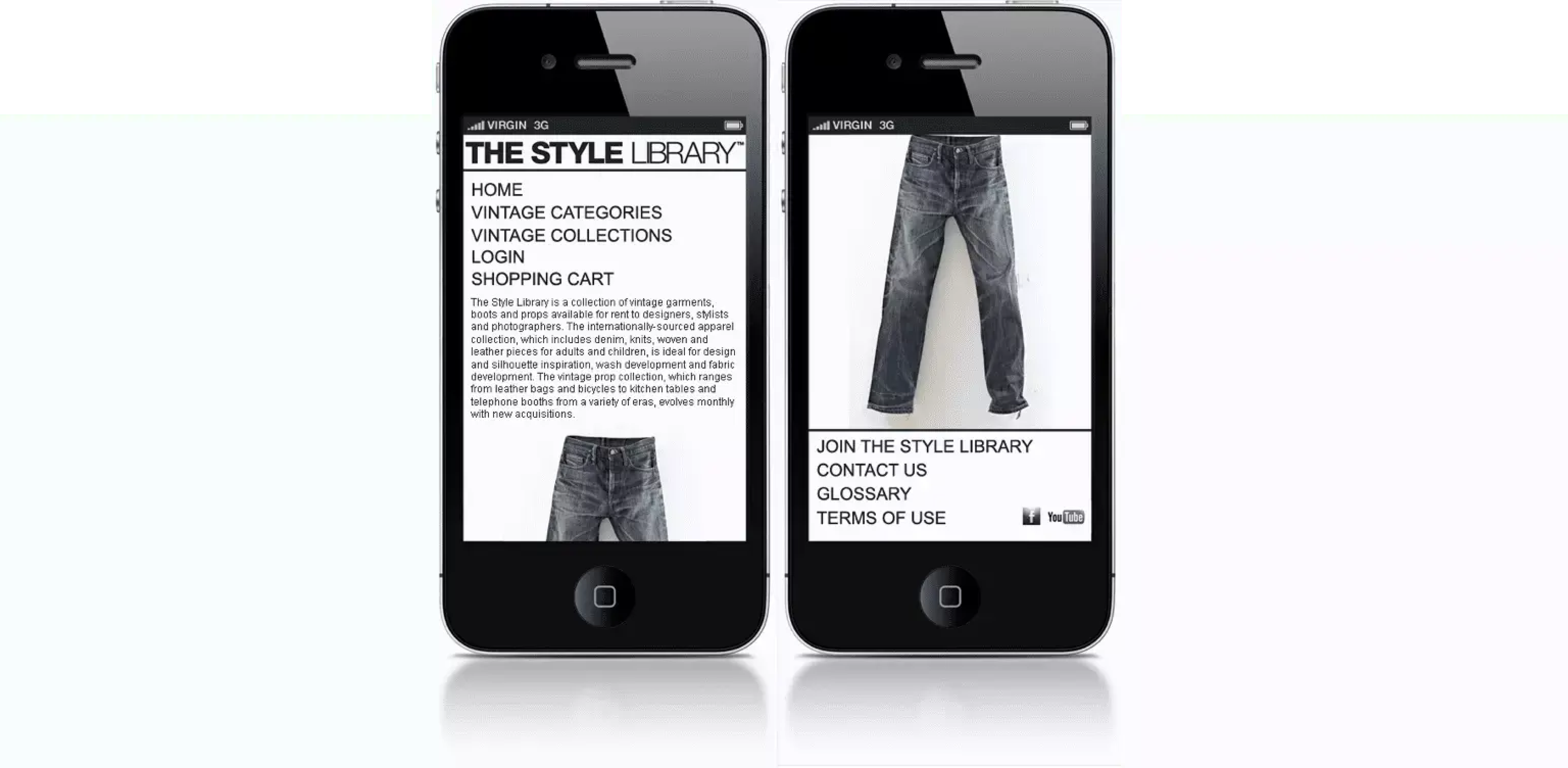
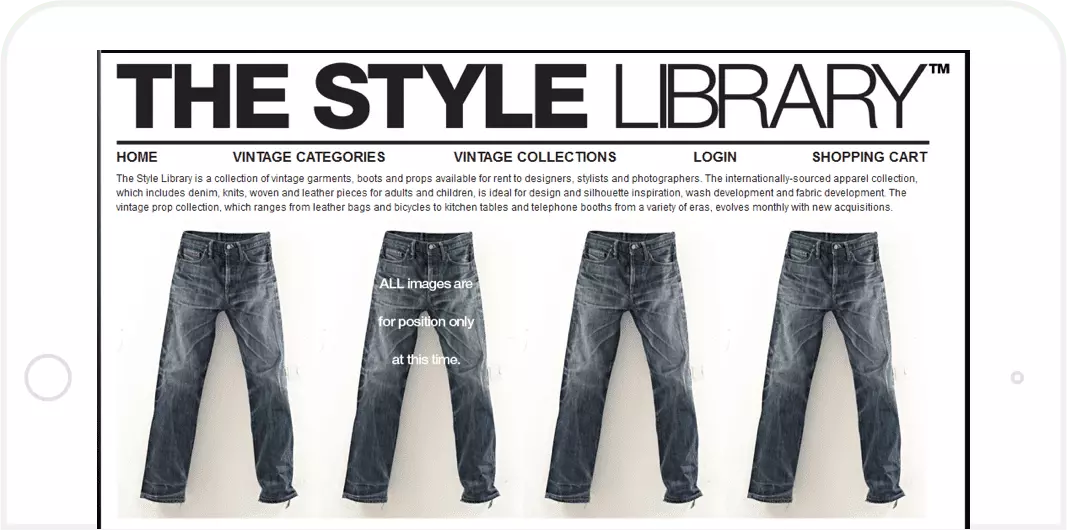
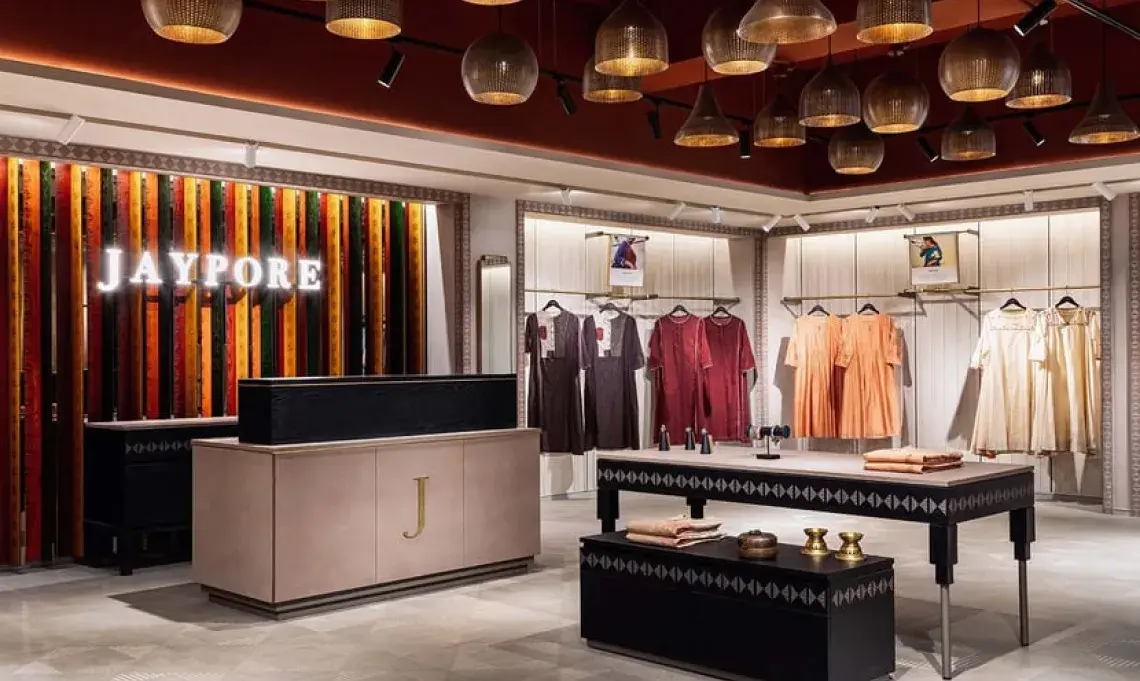
The Style Library, operated by Olah Inc., rents high-end vintage fashion, textiles and design pieces to industry professionals. Designers, stylists and studios borrow one-of-a-kind archive pieces for reference and production work. It is a private service by design, and the archive photography is itself a commercial asset that competitors and content scrapers would happily take for free.
Neither of those requirements fits a conventional storefront. E-commerce platforms assume a permanent sale, a stock count that decrements, and a public catalogue open to anyone who lands on it. A rental archive needs the opposite on all three counts: an item that comes back, a lifecycle rather than a count, and a catalogue that shows strangers just enough to want membership and nothing more.
Net Solutions customised Magento into a private rental platform built around a three-tier user model. Strangers browse watermarked, low-resolution imagery. Applicants can build a saved cart while their membership is reviewed. Approved Customers get unwatermarked high-resolution photography, magnification and rental checkout. Behind that gate we built rental-aware cart logic, state-driven inventory that prevents double-booking, per-order rental agreements inside checkout, automated ImageMagick asset processing, FedEx tracking, an automated return and late-fee engine, and an administrative dashboard that gives staff a live view of where every piece in the archive currently sits.
Standard e-commerce tools are built on assumptions that a private rental archive breaks one by one. Each assumption had to be replaced rather than configured around.
The archive photography is valuable in its own right. On a conventional storefront, full-resolution imagery of rare vintage pieces sits in public view with nothing to stop unauthorised commercial reuse.
Standard checkout assumes the item leaves and never returns. There was no concept of tiered weekly rates, no signed rental agreement, no late surcharge, no damage or cleaning charge, and no replacement valuation.
An item out on rental is not sold and not in stock. It is temporarily unavailable, and it will come back. Traditional inventory logic left rented pieces visible and bookable, which for a one-of-a-kind archive means promising the same garment to two clients.
Return dates, staged reminders, late penalties and damage assessments were all administrative work. Every additional rental added overhead rather than being absorbed by the system.
Membership screening is central to how the business operates, but a standard storefront lets any visitor place an order. The vetting process had to be enforced by the platform, not applied after the fact.
This was an architecture change, not a theme and extension exercise. Two decisions shaped everything that followed. Magento had to move from a transactional purchase model to an inventory lifecycle model, and access control had to live in the data layer rather than the interface.
Six systems, each one replacing an assumption a standard storefront makes.
Browsing, saving and renting unlock at three different levels of trust.
We engineered a custom permission framework with three user states. Strangers, meaning unauthenticated visitors, see watermarked low-resolution thumbnails only. Applicants can register and build a saved cart while their membership application is under review, which keeps intent alive during vetting instead of losing it. Customers, once approved by an administrator, get unwatermarked high-resolution photography, magnification tools and rental checkout.
We customised cart logic to calculate weekly rental tiers based on the duration the customer selects. When an item is rented, the system removes it from active storefront listings automatically. If another member’s saved cart holds a piece that has since gone out, the system purges it on cart reload, so a one-of-a-kind item can never be promised twice.
We built mandatory per-order rental agreements directly into the checkout flow. Customers review and accept terms covering weekly rates, late-return surcharges, damage and cleaning fees, and full replacement valuations before the transaction is processed through PayPal Pro. The agreement becomes part of the order record rather than a separate document to chase.
We integrated ImageMagick scripts into the upload pipeline. High-resolution product images are converted into watermarked low-resolution thumbnails for general browsing as they are ingested, with full-resolution zoom reserved for authenticated Customer accounts. Staff upload once and the protection is applied without a manual step anyone can forget.
We built an automated communications engine that dispatches weekly rental status updates and daily return countdown notifications. When an item goes overdue, the system applies progressive weekly extension charges for up to four weeks before converting the transaction to a replacement-value charge. On check-in, staff can assess post-return inspection charges for damage or specialist cleaning against the same order.
We developed an administrative Rental Status Dashboard giving real-time visibility of active rentals, holding clients, due dates, overdue counts and lost-item flags, with role-based permissions controlling what each staff member can see and do. On the customer side we built a self-service area for account details, billing and shipping addresses, saved favourites and order history.
High-resolution archive imagery and checkout are available only to approved members, so the membership model the business depends on is enforced by the platform rather than by manual intervention.
Physical inventory and digital availability stay synchronised, with active rentals hidden until the item is checked in and inspected. For an archive of single pieces, this removes the failure mode that damages client relationships fastest.
Progressive weekly late charges and automated replacement invoicing turn overdue items from an awkward phone call into a documented, automatic process that follows terms the customer already accepted.
Automated watermarking and low-resolution preview enforcement protect the archive’s visual assets while still giving prospective members a catalogue worth applying for.
The Rental Status Dashboard gives administrators a live picture of where every piece is, what is due back, what is late and what is flagged, which is the difference between managing an archive and remembering it.
Approval-gated access, lifecycle inventory and rental billing cannot be configured into a standard cart. We changed the data model and the access architecture, which is the only level at which these requirements hold together.
Restricting what a user can see is a backend problem. We separated public discovery from protected asset and checkout endpoints so that unauthorised access fails at the request, not at the interface.
The expensive part of a rental business is the admin around the rental, not the checkout. We automated reminders, escalating late charges, inspection billing and shipping updates, because that is where the operational cost actually sits.
Platform customisation, media processing and third-party integration all had to agree with each other for this to work. Handling them together meant the backend structures and the customer journey were designed as one thing, which matters when the journey has no off-the-shelf equivalent to copy.
It needs access-control gates, rental-specific checkout logic, temporary availability states and full lifecycle management. Traditional retail e-commerce is built around a permanent sale, while a rental platform has to track each item continuously through borrowing, return, inspection and restock.
Through tiered access enforced in the backend. On The Style Library, public visitors see watermarked low-resolution thumbnails processed by ImageMagick, while high-resolution imagery and magnification unlock only after an administrator approves a membership application. The protection is applied at upload, so there is no unprotected file exposed to an unauthenticated request.
When an order completes, the item’s state changes to unavailable and it is removed from storefront listings and search results. If the same item is sitting in another user’s saved cart, the system purges it on reload, so two customers can never hold the same piece.
The customer selects a rental duration at checkout and the cart applies weekly tier pricing. The platform tracks the due date, sends weekly status updates and daily return countdowns, then applies progressive weekly extension charges for up to four weeks if the item is not returned. Beyond that, it invoices the full replacement value stated in the rental agreement.
Yes. Terms covering rates, late surcharges, damage and cleaning fees and replacement valuations can be presented and accepted per order before payment is processed, which makes the agreement part of the order record rather than a separate document to file and chase.
Archive photography is a commercial asset in its own right. Automated watermarking and low-resolution preview generation protect it from unauthorised reuse while still leaving a catalogue attractive enough to convert prospective members.
Yes. With a carrier API such as FedEx, staff can generate return shipping labels, attach tracking numbers to the order record automatically, and send customers live updates on dispatch and return arrival.
Active rentals, who is holding each item, revenue generated per piece, return due dates, how overdue anything is, and flags for items lost or pending inspection. The point is a single operational view of the physical archive rather than a report someone has to assemble.
Yes, but it is a structural change rather than an extension install. Rental pricing, availability states, agreements and lifecycle automation touch the cart, the catalogue, the order model and the media pipeline. Done properly, the platform keeps its commerce foundations while behaving like a rental system.

It depends on how much of the model is structural. Access tiers, lifecycle inventory, rental billing and automated communications each add architectural weight rather than screens. A phased approach works best: establish the access model and inventory states first, then layer on billing automation and operational reporting.
Whether you are building an approval-gated platform, automating a rental lifecycle, or writing inventory rules that off-the-shelf software will not bend to, there is usually an engineering answer. Tell us what the bottleneck looks like and we will show you how we would approach it.
Results matter. Discover how our customized solutions have delivered measurable business outcomes for clients across various industries. Each case study highlights the strategic impact of our work, turning challenges into opportunities for growth.
Ask Sol anything about digital products, AI, engineering, or growth, and get answers drawn from years of Net Solutions thinking and experience.